
Scopingworkshop und Vernetzungsworkshop zur Wissenschaftsreflexion
Projektleitung: Dr. Michael Jungert (PI), Dr. Jon Leefmann
Finanzierung: VolkswagenStiftung (Förderlinien „Scoping Workshops“ und Vernetzungsworkshops“)
Projektlaufzeit: Juni 2023 bis Dezember 2025
Wissenschaftsreflexion versteht sich als ein interdisziplinäres Feld, das die wissenschaftsbeforschenden Disziplinen in Forschung und Lehre zusammenbringen und fachgrenzenübergreifende Perspektiven auf die Wissenschaften umfassender ermöglichen möchte. Durch die Förderung der VolkswagenStiftung kann dieses Unterfangen im Rahmen von drei Workshops vorangetrieben werden. Mit jeweils 30 ausgewiesenen ExpertInnen aus allen Bereichen der Wissenschaftsforschung werden Methodenfragen erörtert, Grundlagen für gute Interdisziplinarität geschaffen und konkrete Forschungsfragen gemeinsam erarbeitet.
Language, Visualizations and Concepts – On the Evolution of the Corona Discourse (LaViCo) /
Sprache, Visualisierungen und Konzepte – Zur Evolution des Corona-Diskurses
Projektleitung: Dr. Sebastian Schuol (PI), Dr. Katrin Götz-Votteler, Dr. Simone Hespers
Finanzierung: VolkswagenStiftung (Förderlinie „Corona Crisis and Beyond – Perspectives for Science, Scholarship and Society“)
Projektlaufzeit: ab Frühjahr 2021 (18 Monate)

Am Fallbeispiel des Diskurses zur Corona-Pandemie untersucht das von der VolkswagenStiftung geförderte Forschungsprojekt mittels eines evolutionstheoretischen Ansatzes, wie wissenschaftliche Erkenntnisse vermittelt wurden, wie sich diese im Zeitverlauf verändert haben und welche Konzepte sich schließlich durchgesetzt haben. Aus drei verschiedenen Perspektiven wird analysiert, wie das entstehende Wissen über das Virus und die Erkrankung (a) versprachlicht sowie (b) visualisiert wird und (c) auf welche Weise der Austausch zu diesem Thema stattfindet. Ein weiteres zentrales Erkenntnisinteresse besteht darin zu eruieren, ob und wenn ja, aus welchen Gründen, sich bestimmte Vermittlungswege durchsetzen konnten. Wir erhoffen uns von diesem interdisziplinären Ansatz Ergebnisse, die auch für zukünftige wissenschaftskommunikative Anliegen wegweisend sein können.
Funded by VolkswagenStiftung, Corona Crisis and Beyond – Perspectives for Science, Scholarship and Society
General description
The subject of Corona is of direct concern to the entirety of the global population. However, at the beginning of the pandemic, knowledge about the virus was little and limited to a small group of experts; there was thus an asymmetry of knowledge. In the following discourse, mainly four groups of participants emerged: experts, politicians, the media and the public. Of these four groups, experts took over a central position in the communication in the first weeks of the pandemic.
Since then, science communication has been playing a decisive role in the current situation: it is needed to convey information about the epidemiological course and necessary measures against an untamed spread of the disease, and to communicate the process of gaining scientific knowledge on the subject. To achieve this goal, science communication has to depend on the media and on their way to approach and edit the topic.
The Corona pandemic offers the peculiarity that due to the extremely rapid sequence of events and the immediate need for action, the process of gaining scientific knowledge, making it available for the media and communicating it to all parties involved, has happened and is happening more or less simultaneously. It can thus be virtually analyzed in real-time, with the results forming a promising basis for future science communication regarding similar large-scale scientific topics.
Approach and aims of the study
A discourse analysis with focus on the interrelation between science and the media asks for an interdisciplinary approach: Linguistics, Visual Culture Studies and Philosophy are brought together to analyze systematic changes on the linguistic and visual level in addressing the topic, as well as in the understanding and definition of the various parties involved in the communication process. This will be done for a defined period of time.
In doing so, we assume that there have been transformations: we expect to find a variety of approaches in the beginning, of which only a few have prevailed. The focus is going to be on articles written by editorial media, i.e. newspaper and magazine articles. Although it would certainly be extremely informative to also include social media, it is not feasible within the time frame of the project envisaged here.
In a first step, a descriptive analysis of the communication processes will be undertaken, taking into account three different points of view: linguistic realizations, visualizations, and conceptualizations/modeling.
- From a linguistic point of view, it will be analyzed how conveying the information on the topic has been linguistically realized. This applies to the lexical and idiomatic level, i.e. looking into the choice of words e.g. to describe the virus and the selection of semantic frames and metaphors to interpret the situation. On the grammatical level, it is interesting to investigate whether e.g. the use of active vs. passive constructions attributes an agentivity to certain subjects or whether this is avoided. Furthermore, the narratives used will be identified and analyzed.
- From the point of view of Visual Culture Studies, it will be examined how abstract knowledge is made visible (e.g. how the virus is pictured, how the spread of the virus is translated into graphics), how the relationship between these visualizations and the reality can be described, and what effect they have on the recipients. Equally relevant to the discourse are pictures that show the effects of the Corona pandemic on everyday life. This raises the question of choice and effect. This applies the iconographic, semiotic and the formal level.
In the interplay of Linguistics and Visual Culture Studies, it will be further analyzed how these two levels relate to each other and whether they contradict, supplement or reinforce each other. - From the point of philosophical discourse analysis, it will be examined how science communication is operationalized. A first step is to establish whether the communication process can be described as rather paternalistic or participatory, and whether recipients are rather seen as consumers (typical for the relationship expert vs. lay-person) or as partners in a dialogue. For this purpose, it is necessary to differentiate the group of communicators and to determine who actually speaks (experts, journalists, politicians etc.) to whom (target groups vs. all). Of particular interest is the question whether a transformation of knowledge is discernible in the communication process and whether loss of and/or reduction or even transformation of knowledge take place. Do language and visualizations support these changes?
Die Politik der Vernetzung: Interessenvertretung und Naturforschung in der frühen Leopoldina (1652-1769) / Networking politics: Status Interests and Study of Nature in the Early Leopoldina (1652-1769)
Projektleitung: Dr. Julia Carina Böttcher
Finanzierung: DFG (Förderlinie „Sachbeihilfe: Eigene Stelle“)
Projektlaufzeit: 10/2020 – 09/2023
Anliegen des Projekts ist es, anhand der Mitglieder der frühen Leopoldina das Handlungsmuster des frühneuzeitlichen Gelehrten im Spannungsfeld zwischen Naturforschung und Politik zu untersuchen.
Die frühe Leopoldina nutzte als Gelehrtengesellschaft erfolgreich die spezifischen Gegebenheiten im Reich: 1652 als Academia Naturae Curiosorum gegründet, etablierten die in ihr vereinigten Mediziner binnen weniger Jahrzehnte eine stabile, unabhängige und privilegierte Einrichtung für Naturforschung. Als Ärzte vertraten sie geschickt ihre Interessen in ganz verschiedenen Feldern: innerhalb der Akademie, in Städten, an Universitäten, am Kaiserhof und in den Territorien des Reichs. Über ihren Deutungsanspruch für Themen wie Gesundheit und Hygiene, Natur und ihre Erforschung gestalteten sie die frühneuzeitliche Gesellschaft aktiv mit.
Die Mitglieder der Leopoldina sind historisch interessant als Personen, die in verschiedenen Tätigkeitsfeldern agierten, sei es politisch oder naturforschend, im städtischen oder akademischen Kontext. Die Geschichte der frühen Leopoldina bietet die geschichtswissenschaftlich wie wissenschaftshistorisch reizvolle Möglichkeit, das Verhalten ihrer Mitglieder als Akteure in den verflochtenen Aktivitätsfeldern von Naturforschung und Politik zu analysieren. Forschungsleitende Hypothese ist, dass sich mithilfe einer Untersuchung dieser naturforschenden Ärzte Charakteristika des Handlungsmusters einer sich herausbildenden Funktionselite erschließen lassen.
Scheitern in den Wissenschaften – historische und systematische Perspektiven
Projektleitung: Dr. Michael Jungert (FAU Erlangen-Nürnberg, ZiWiS), Dr. Sylvia Brockstieger (Universität Heidelberg), Dr. Mona Garloff (Universität Innsbruck)
Finanzierung: VolkswagenStiftung (Förderlinie „Originalitätsverdacht?“ Neue Optionen für die Geistes- und Kulturwissenschaften)
Projektlaufzeit: 01.04.2020 – bis 31.07.2022
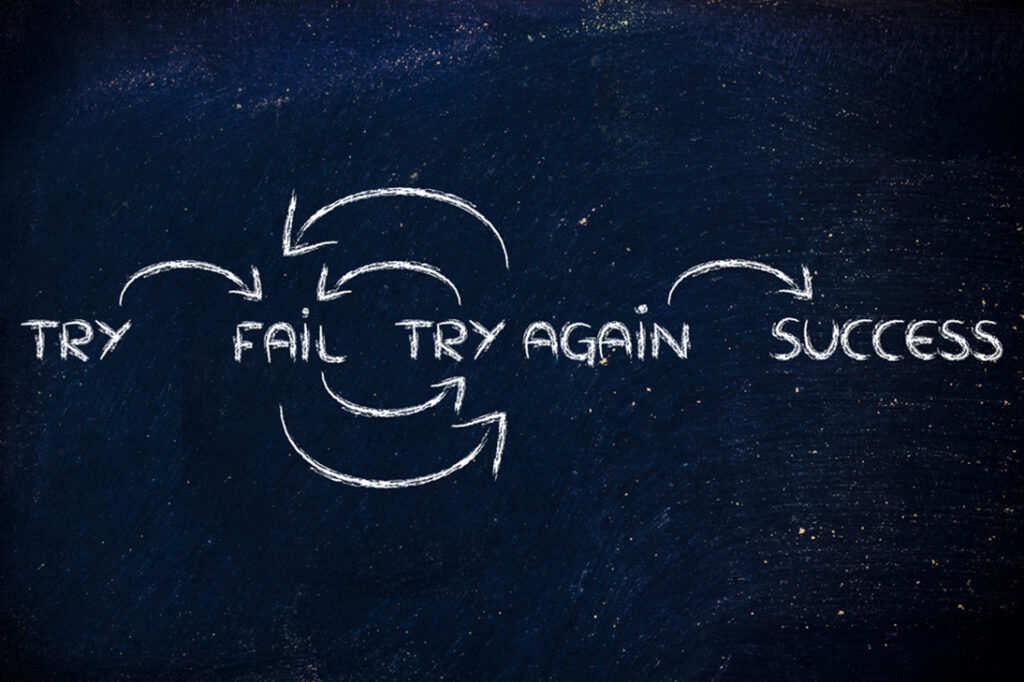
Das Scheitern ist in seinen unterschiedlichen Erscheinungsformen ein ständiger Begleiter der wissenschaftlichen Praxis, wird jedoch im innerwissenschaftlichen Diskurs und in der Außendarstellung von Wissenschaft kaum thematisiert. Auch seine mitunter produktiven Implikationen werden verschwiegen. Gescheiterte Ansätze oder Experimente können in der Regel nicht publiziert werden, es mangelt an der systematischen Sichtbarmachung erfolgloser Versuche, und Drittmittel werden vor allem auf der Basis greifbarer und (vermeintlich) neuartiger Ergebnisse und vorzeigbarer Erfolge vergeben. Um die Bedingungen für einen produktiven Umgang mit dem Scheitern zu verbessern, sind das Erkennen des Prozesscharakters von Wissenschaft und die eingehende historische Analyse ihrer Kontexte, Formen und Auswirkungen „gescheiterter“ Wissenschaft von entscheidender Bedeutung. In unserem Projekt sollen erstmals drei Perspektiven auf das Scheitern in der Wissenschaft zusammengeführt werden, nämlich die der Wissenschaftsphilosophie, der Geschichtswissenschaft und der Literaturwissenschaft, sowie vormoderne und moderne Problembestände aufeinander bezogen werden. Dieses Vorgehen verstehen wir im Sinne einer Problemgeschichte des Scheiterns, in der die verschiedenen Formen, Funktionen, Semantiken und Praktiken scheiternder Wissenschaft, wie sie uns in ausgewählten Fällen der Wissenschaftsgeschichte entgegentreten, auf Gemeinsamkeiten und Unterschiede hin befragt werden. „Scheitern“ hat eine epistemologische Seite (Irrtum) und eine praxeologische Seite (Scheitern als Zuschreibung), deren wechselseitige Verschränkung es zu erhellen gilt.
Public Research and Private Knowledge – Science in Times of Diverse Research Funding
Projektleitung: Dr. Michael Jungert, Dr. Julia Böttcher, Dr. Jon Leefmann, Dr. Christoph Merdes, and Dr. Sebastian Schuol
Finanzierung: Universitätsbund Erlangen-Nürnberg
Projektlaufzeit: 01.03.2019-28.02.2022

The production and distribution of knowledge are key processes in scientific and scholarly inquiry. However, this process are not and have never been limited to universities and public research institutes alone, but extend to agents as diverse as the Research & Development departments of companies, citizen scientists, and private non-profit research institutes. In recent years, these agents have shown an increased interest in basic ˗as opposed to applied˗ science, for example in fields of rising social significance such as AI or biomedical technology. These specific research interests in turn direct attention to the sources of funding, and, as a consequence, to the direction of inquiry and the accessibility of results.The main problem that arises from this development can be expressed in two questions: First, does the influence of private funding change the selection of research topics in an epistemically or otherwise (un-)desirable direction? And second, does it lead to a privatization of knowledge, and if so, what are the consequences of this privatization?
Some key questions that arise in this area of investigation are:
- Where do new sources of research funding come from, and how important a role do they play? Which agents foster the development, which methods do they use, and what are their primary motivations?
- What are the epistemic consequences, and who is affected by them? What is the impact of business interests on epistemic norms and ideals, and are there any (additional) sources of bias to be expected?
- Have there been any (changes of) institutional structures in the last decades that have stimulated or hindered these tendencies? Which historical idea of science is at stake? Which factors affected the practices of organizing the production and distribution of scientific knowledge during the second half of the 20th century?
- Is academic freedom threatened by these developments, and if so, to what extent? How could it be maintained? What are the epistemic effects of endowment chairs and industry-sponsored PhD Projects?
This set of questions requires an epistemological assessment as well as a historical, sociological, and economic perspective. Therefore, the interdisciplinary research project at the Center for Applied Philosophy of Science and Key Qualifications at Friedrich-Alexander-Universität Erlangen-Nürnberg (Erlangen, Germany) aims at bringing together researchers from all pertinent fields in order to further our understanding of this apparent organizational shift in knowledge production and distribution and to accurately evaluate the challenges and opportunities it presents.
The results of the project will successively be published in an open access publication („Frontiers Research Topic“). The first contributions can be found on the „Research Topic“ homepage.
Please also note the accompanying conference on the topic of the research project
Knowledge through Trust? The Epistemology of Scientific Expert Testimony /
Wissen durch Vertrauen? Zur Epistemologie der Zeugnisse wissenschaftlicher Experten
Projektleitung: Dr. Jon Leefmann
Finanzierung: DFG (Förderlinie „Sachbeihilfe: Eigene Stelle“)
Projektlaufzeit: 01.01.2018 – 30.06.2021

Ziel des von der DFG für drei Jahre geförderten Projekts ist es, eine Theorie darüber zu entwickeln, wie Nicht-Experten trotz ihrer epistemisch stark asymmetrischen Beziehung zu wissenschaftlichen Experten aus deren Zeugnissen erworbene Überzeugungen rechtfertigen und damit als Wissen auszeichnen können. Im Zentrum steht dabei der Begriff des „epistemischen Vertrauens“. Zum einen wird untersucht, was diese Haltung des Nicht-Experten gegenüber den Wissensansprüchen wissenschaftlicher Experten in epistemischer Hinsicht im Kontrast zu anderen Haltungen wie Skepsis oder Autoritätsgläubigkeit auszeichnet. Zum anderen soll durch die Untersuchung zweier wissenschaftsphilosophisch relevanter Expertenkontexte erklärt werden wodurch diese Haltung (wenn überhaupt) als Methode des Wissenserwerbs verlässlich wird: Der Wissensproduktion in interdisziplinären Forschergruppen und der Wissenschaftskommunikation mit einer interessierten Öffentlichkeit. Insbesondere soll dabei die Hypothese geprüft werden, dass auf Expertenzeugnissen beruhende Überzeugungen des Nicht-Experten nur dann als gerechtfertigt gelten können, wenn Expertenzeugnisse nicht als einseitige Akte der Informationsübermittelung, sondern als Kommunikationsprozesse aufgefasst werden, in denen die Rechtfertigung der vom Nicht-Experten erworbenen Überzeugung in einem vernünftigen Prozess von beiden Kommunikationspartnern gemeinsam konstruiert wird.